In brief
Removing masonry does not automatically make every replacement support suitable. A changed load path may concentrate loads in different places. The receiving structure and foundations need assessment too.
Follow the load path to the ground
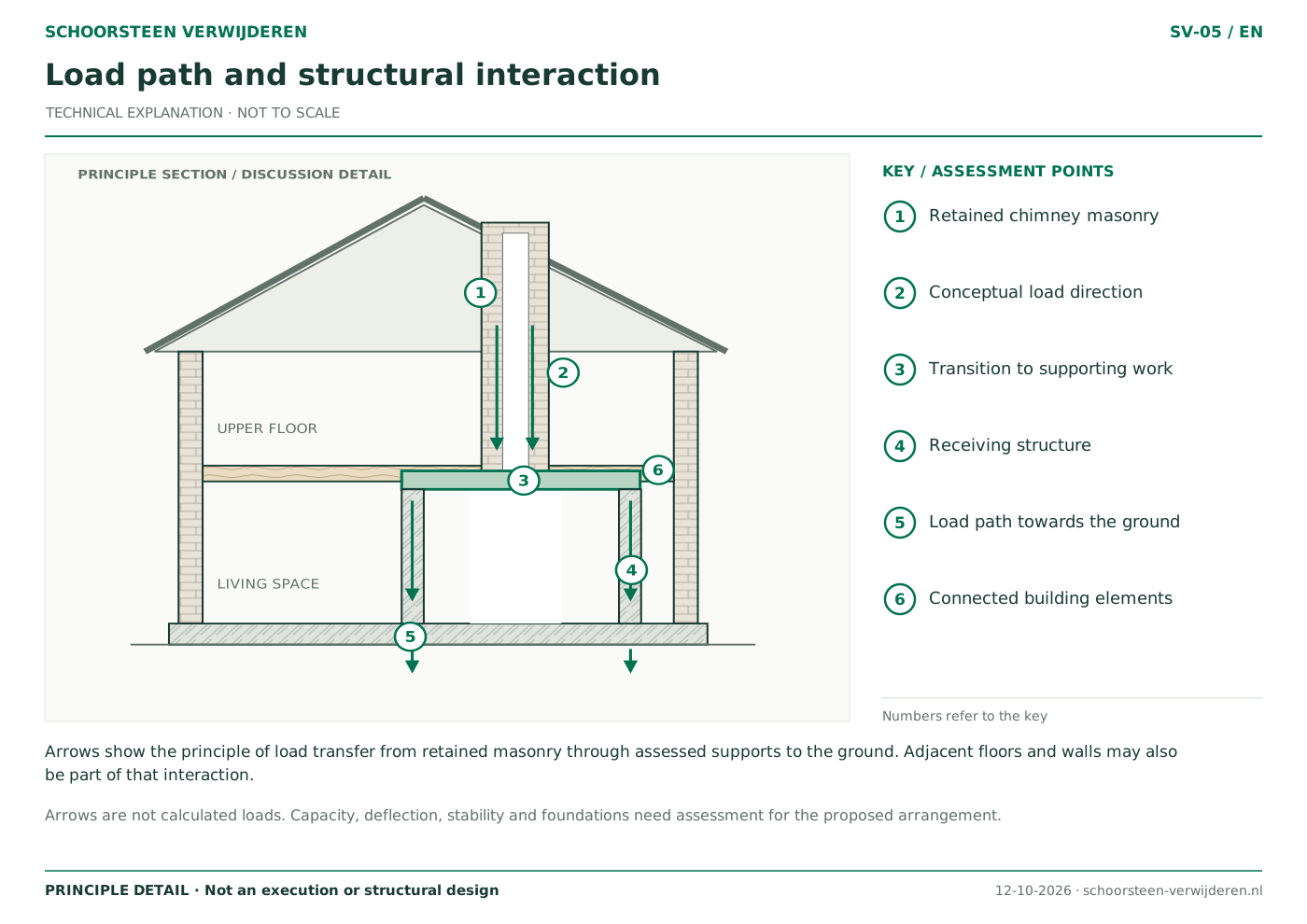
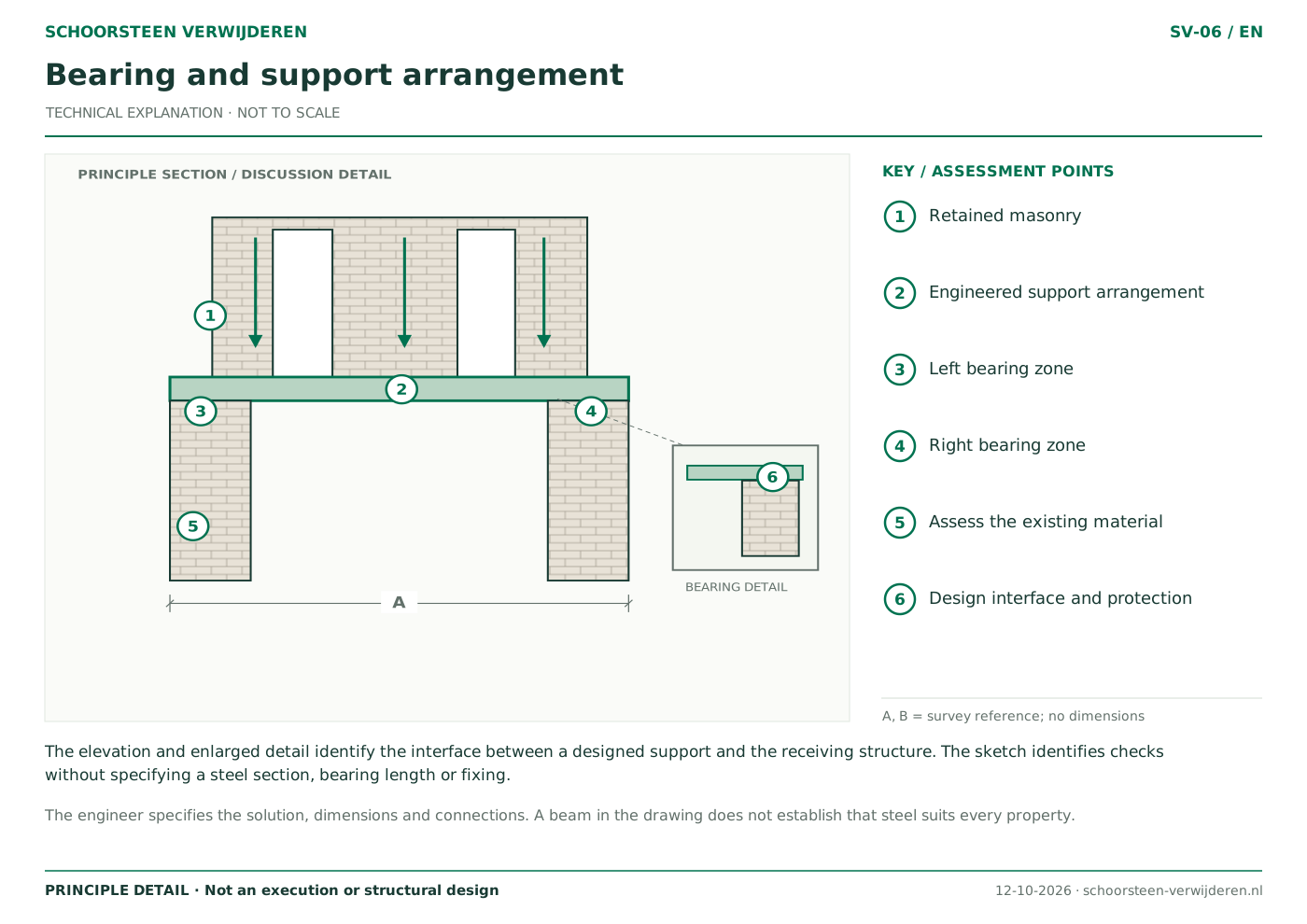
A load path describes how forces travel from a building element through the structure to the ground. Removing the lower chimney while retaining the upper section can change that route. A replacement support may transfer load to a wall that did not previously receive it in the same way.
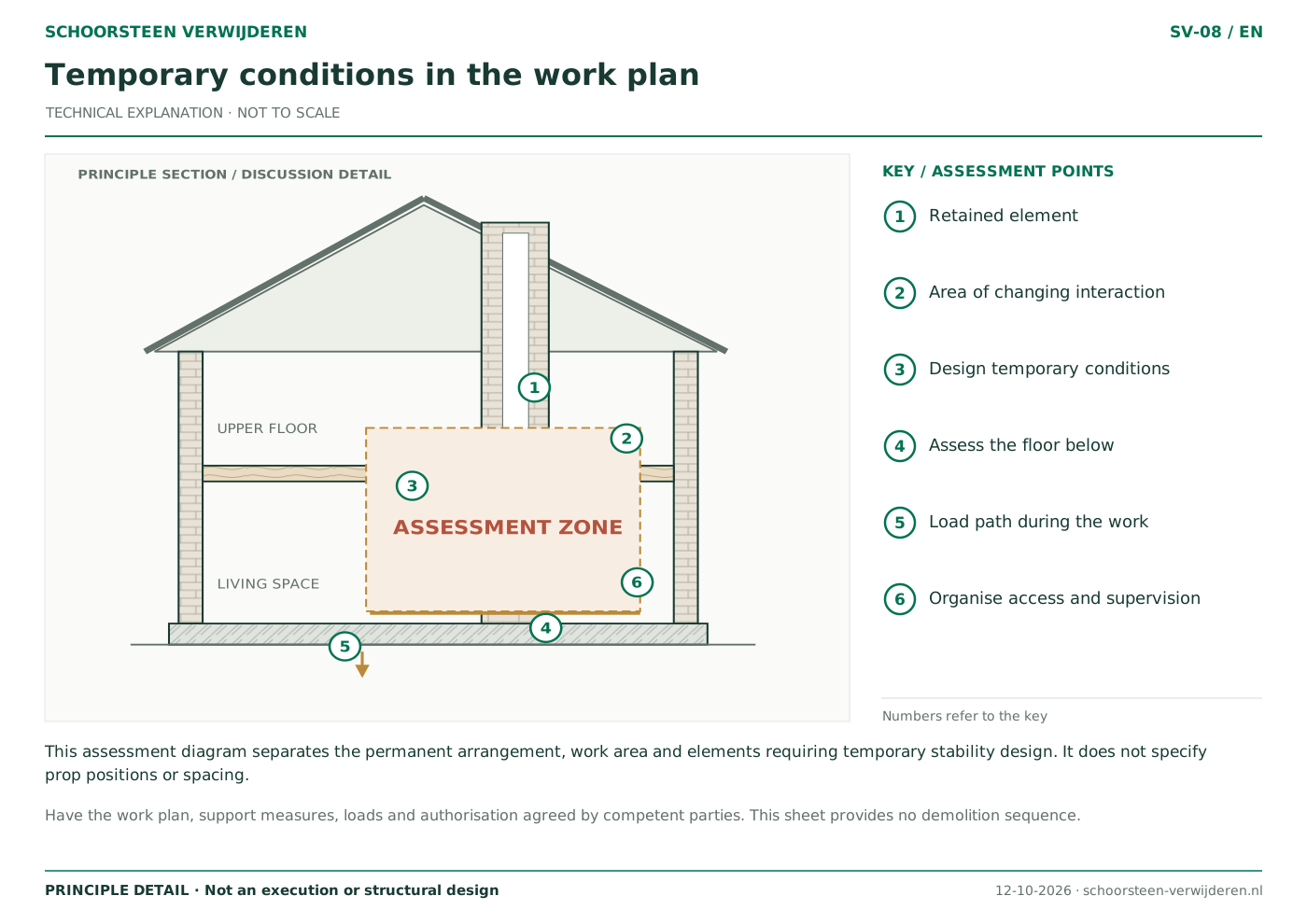
A beam calculation alone therefore does not assess the whole arrangement. Connections, receiving elements and foundations must suit the design. Temporary loads during the work also need consideration. The visible floor finish or screed does not establish what actually supports the chimney.
Useful information for the assessment
| Available information | How it helps | What still needs checking |
|---|---|---|
| Foundation or structural drawings | Identify intended original supports and relationships. | Actual construction and later alterations. |
| Previous foundation report | Describes the investigation, condition and uncertainties. | Whether it covers the relevant location and current proposal. |
| Cellar or crawl-space information | Helps discuss access and the visible underside. | Do not enter unsafe spaces or expose structure yourself. |
| Dated photographs of existing cracks | Record visible conditions before work. | A photograph does not explain the cause or establish safety. |
Report existing cracks and alterations
Mention known cracking, settlement, previous foundation work and alterations involving walls. Explain when you first noticed a problem and whether a report already exists. This is more useful than assuming every crack is caused by the foundations.
An old crack is not automatically harmless, and a visible crack does not establish a foundation defect. The assessor decides whether further investigation is necessary. New movement, loose material or obvious instability requires a safety assessment before planned work continues.
Define the scope of the commission
A chimney-removal quotation is not a commission to repair the foundations of the entire property. It should nevertheless identify who obtains missing information, who assesses receiving elements and what happens if the proposed solution is unsuitable for the conditions found.
For investigations, agree which areas need access, whether making good investigation openings is included and when findings may change the price or programme. Record decisions on altered work in writing so the design, investigation and execution remain coordinated.
- Collect existing structural and foundation records.
- Report known defects and previous alterations.
- Have permanent and temporary load paths assessed.
- Agree investigations and any additional repairs separately.
Frequently asked questions
Does removing a chimney always help weak foundations?
That is not a safe general conclusion. Total weight may change, but load distribution and structural interaction can change too. The actual proposal needs assessment.
Does every chimney require a foundation investigation?
Not automatically. The necessary evidence depends on the existing building, proposed alteration and available records.
Read more
- Why the chimney’s structural connections must be assessed
- Removing a chimney breast while retaining the upper chimney