In brief
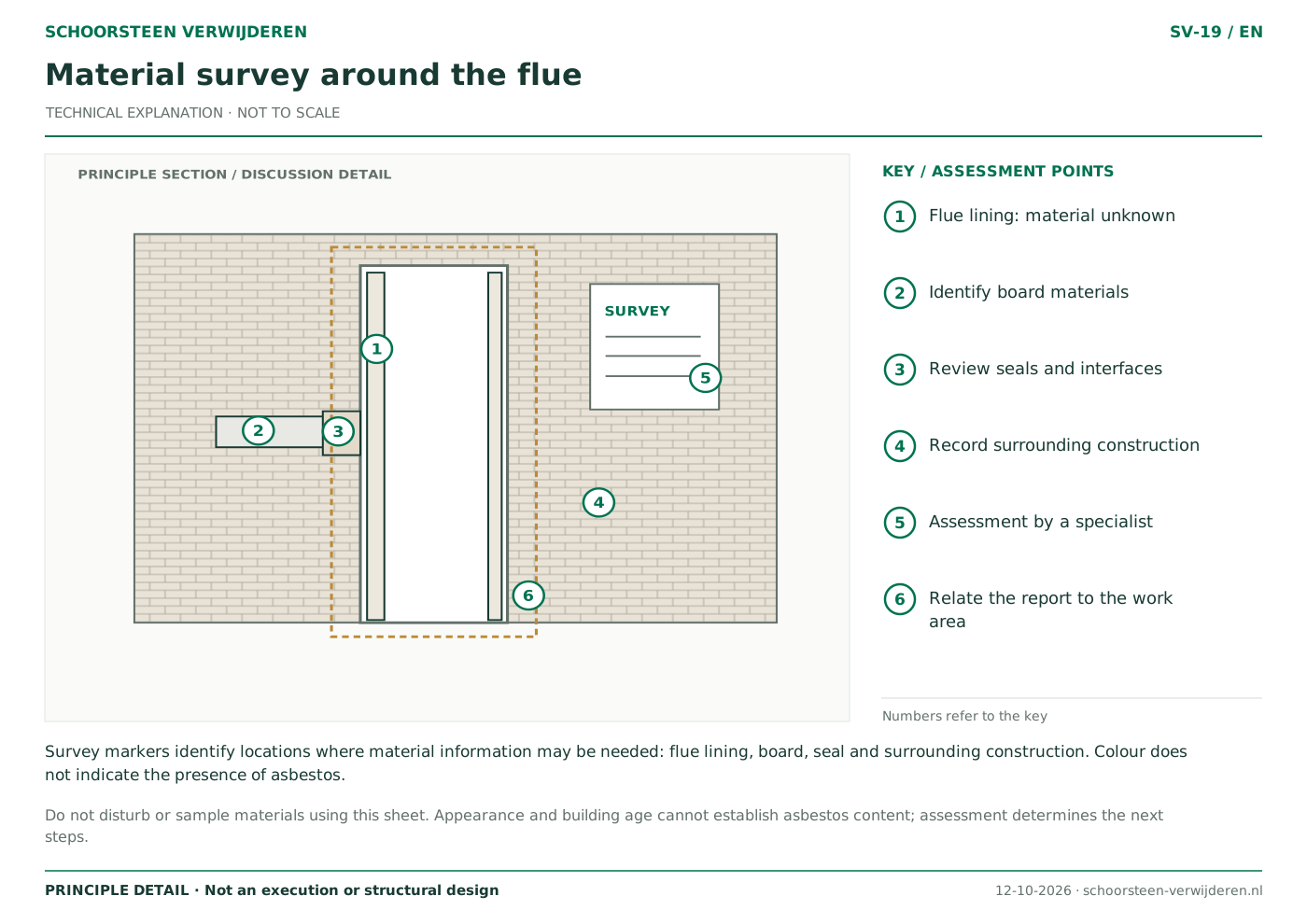
One chimney can contain several materials and flue routes. Identifying materials, checking current use and assessing the structure are separate tasks. Appearance and building age cannot establish asbestos content.
The outer structure and the flue are different elements
A chimney may comprise an outer structure containing one or more internal routes. Removing a metal liner is different from removing the masonry shaft around it. Explain whether your enquiry concerns a pipe alone, an enclosure or the complete chimney.
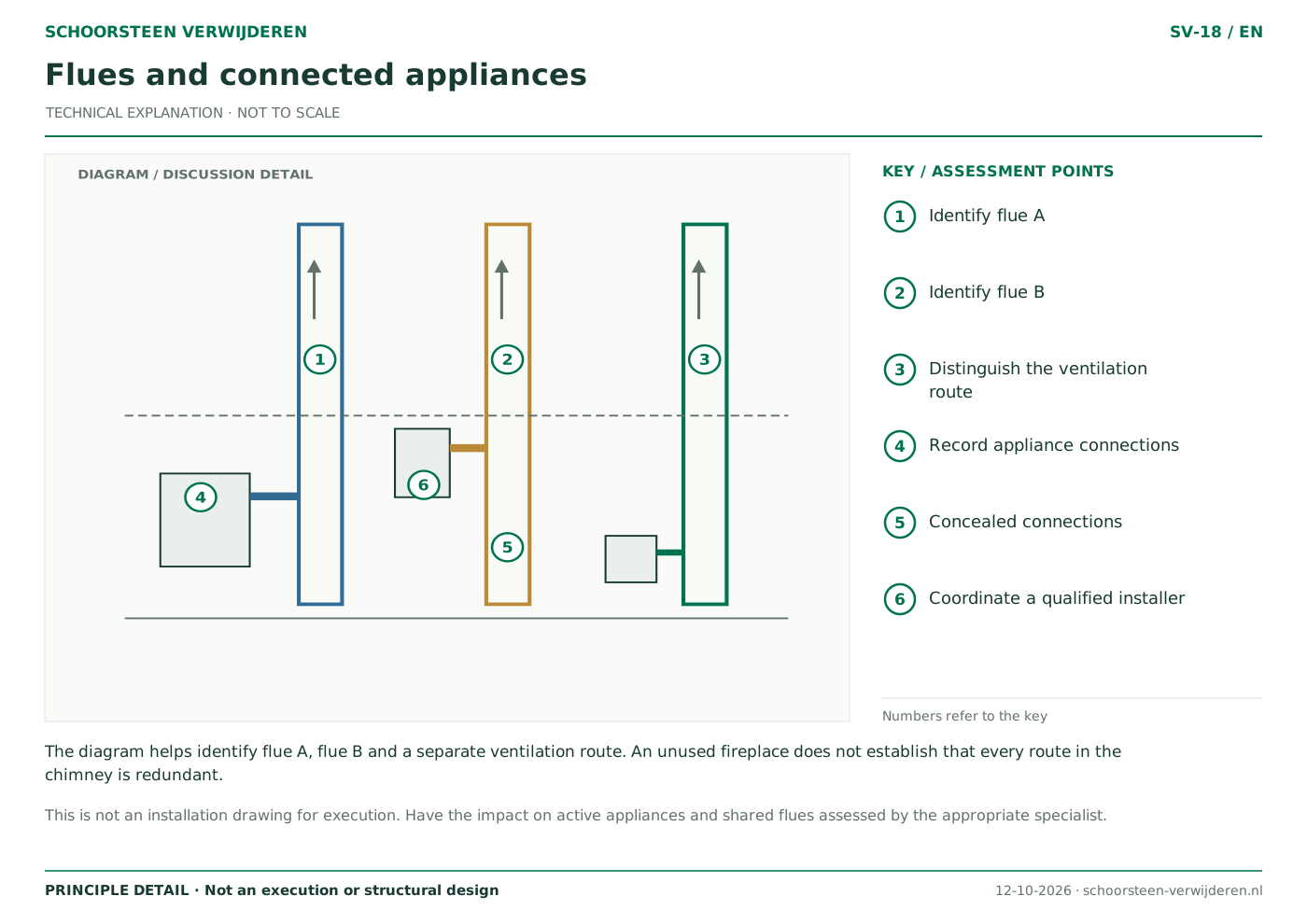
Identify retained functions too. Another exhaust or ventilation route may pass through the same visible stack. The material does not establish that the flue is unused or structurally independent.
Use material categories to ask better questions
| Possible component | Survey question | Not established by appearance alone |
|---|---|---|
| Masonry shaft or breast | Which parts are connected and what will remain? | Structural function, hidden connections or total mass. |
| Ceramic or other mineral flue sections | What is the build-up, condition and surrounding connection? | Whether unknown joints, boards or other parts are asbestos free. |
| Metal pipe or liner | Where does it run and which appliances connect to it? | Whether all routes and connections are out of use. |
| Boards, insulation or seals | Which materials are known and what investigation is needed? | Composition, safety or the appropriate waste route. |
Have unknown materials assessed first
Collect available product records, alteration documents and previous survey reports. Identify the chimney components they cover. A report about one room or material does not establish that every other part has been investigated.
Age and appearance may prompt further investigation, but neither proves the presence or absence of asbestos. Leave suspected materials in place and do not loosen or break them yourself. Agree who determines the necessary investigation and how its findings affect the work plan.
Match waste arrangements and repairs to the findings
Different materials may need different segregation, packaging and disposal arrangements. Have the contractor record what the quotation includes and how unexpected materials will be handled. A rubble skip is not a universal destination for every unidentified component.
Repairs also depend on what remains: a floor opening, contaminated wall or roof penetration. Describe those outcomes separately. If findings differ from the survey, agree the revised approach, costs and any specialist involvement before the affected work continues.
- Provide photographs of visible internal and external parts.
- List known appliances and ventilation connections.
- Relate survey reports to the components actually investigated.
- Include unknown materials, waste arrangements and repairs in the scope.
Frequently asked questions
Does a shiny metal liner prove the whole chimney is asbestos free?
No. Materials surrounding it may have a different composition. Unknown components need appropriate assessment.
Could a chimney without a working fireplace still provide ventilation?
The absence of a fireplace does not establish that every route is unused. Have the routes and connections identified before anything is closed or removed.