In brief
A damp mark is not a diagnosis. Rainwater, condensation, construction moisture and old contamination can require different responses. Have the cause assessed before covering or redecorating the area.
Record observations without deciding the cause
Note when a mark appears or grows. Does it follow rain, cold weather or recent wet finishing work? Record the floor and the side of the former flue involved. Take a dated overview and close-up from a safe position.
These observations help a survey but do not prove the cause. Water can follow concealed routes before becoming visible elsewhere. A dry patch on the inspection day does not rule out an intermittent leak. Have roof areas and inaccessible locations checked by suitable professionals.
Separate the visible symptoms
| What you notice | What to investigate | Avoid assuming |
|---|---|---|
| A patch changing after rainfall | Roof closure, interfaces and possible water routes. | Water enters directly above the visible mark. |
| Damp during cold weather | Temperature differences, air leakage and indoor moisture. | Another coat of paint will solve it. |
| Discolouration without obvious wetness | Substrate, old contamination and any residual moisture. | Every dark mark is an active leak. |
| Moisture after plastering or masonry work | Drying conditions and readiness for finishes. | One fixed waiting period suits every substrate. |
Coordinate roof closure, insulation and airtightness
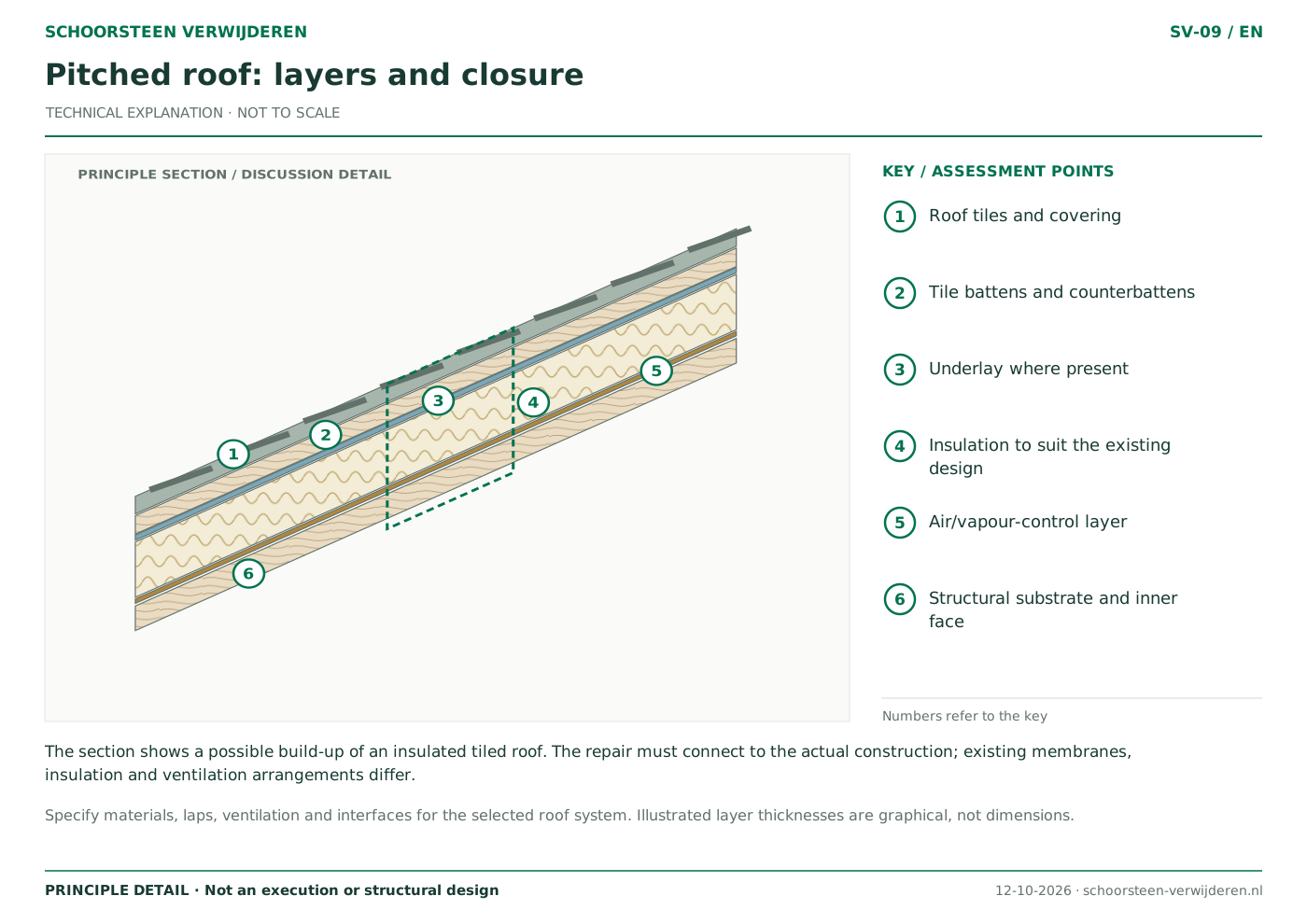
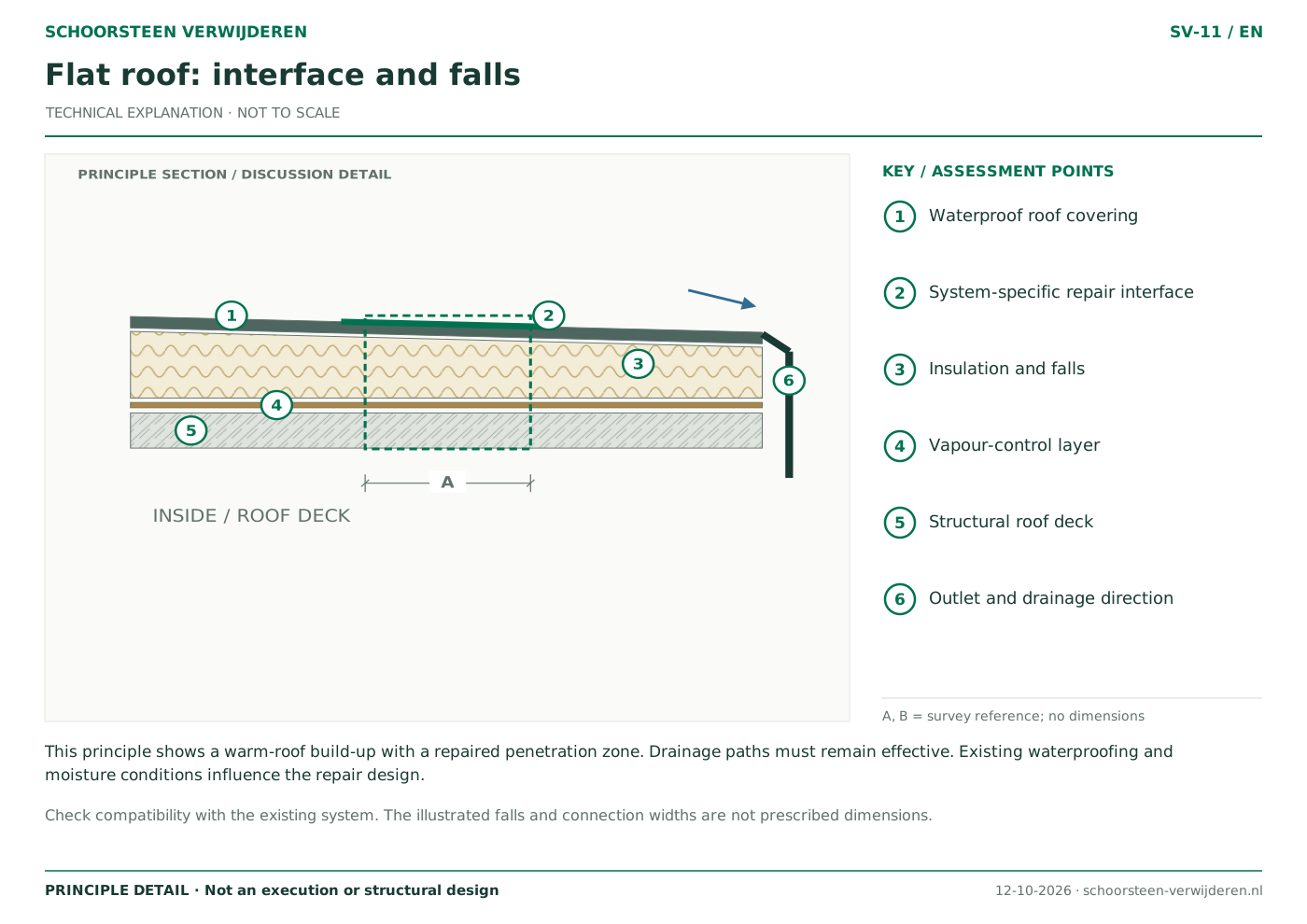
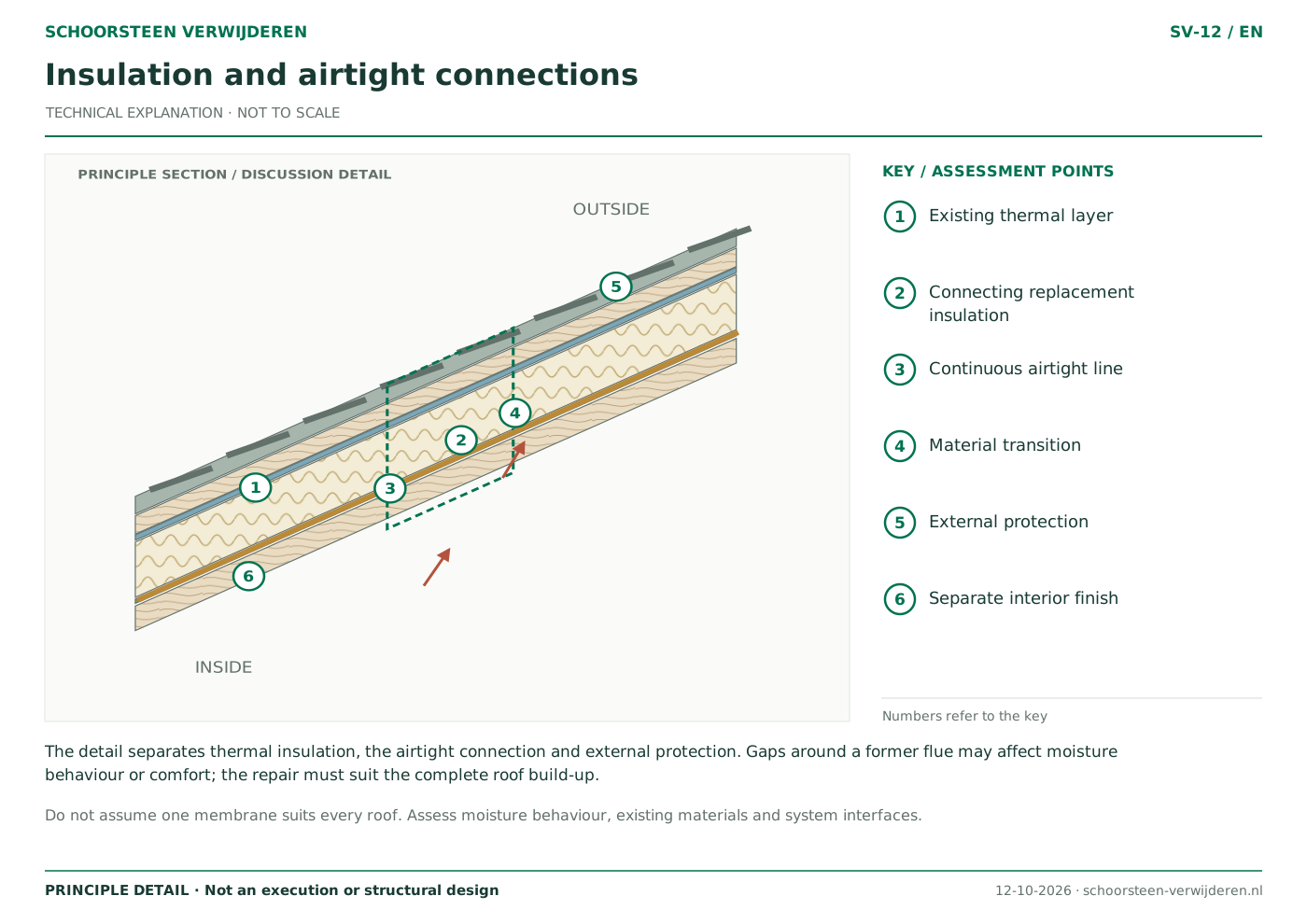
Closing the former penetration must suit the existing roof build-up. Weather protection, insulation and layers controlling air or vapour movement serve different functions. New tiles or a visibly closed inner surface therefore do not describe the entire repair.
Milieu Centraal highlights the importance of existing vapour-control layers when improving roof insulation. An unsuitable combination may trap moisture. Have the repair designed around the actual roof rather than adding a membrane or insulation layer based only on a generic detail.
Agree finishing and follow-up arrangements
Identify who investigates an existing damp problem and whether that investigation is included in the quotation. Ask which substrate conditions the plaster or decoration require. Readiness for finishing depends on materials and conditions, not simply on a calendar date.
At handover, record pre-existing staining and the areas repaired. If a patch returns, provide dates, weather conditions and photographs. Coordinate further investigation and any repairs with the contractor before the affected area is covered again.
- Record the location and development of the problem.
- Keep photographs from before and after the work.
- Include roof layers and interfaces in the repair scope.
- Agree finishing conditions and who to contact if damp returns.
Frequently asked questions
Does chimney removal always resolve damp?
No. It depends on the cause and the completed repairs. Removal does not automatically address water from other interfaces or an unsuitable roof build-up.
Can an old soot stain look like damp?
Discolouration has several possible causes. Have the substrate and moisture condition assessed; colour in a photograph alone is not reliable evidence.