Record the existing condition
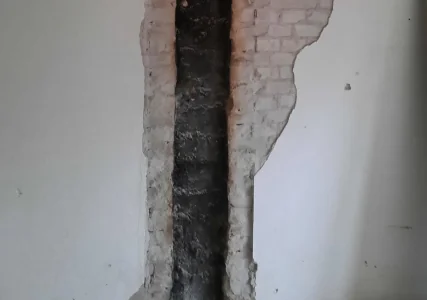
Take an overview photograph and a close-up of the stain without disturbing materials. Explain how long it has been there, whether it changes and whether there is dampness or an odour. This helps with assessment but is not a diagnosis.
Also explain whether the flue is still used or has been closed. This background helps the finishing contractor, especially if earlier paint or plaster treatments have not lasted.
Discuss assessment and preparation
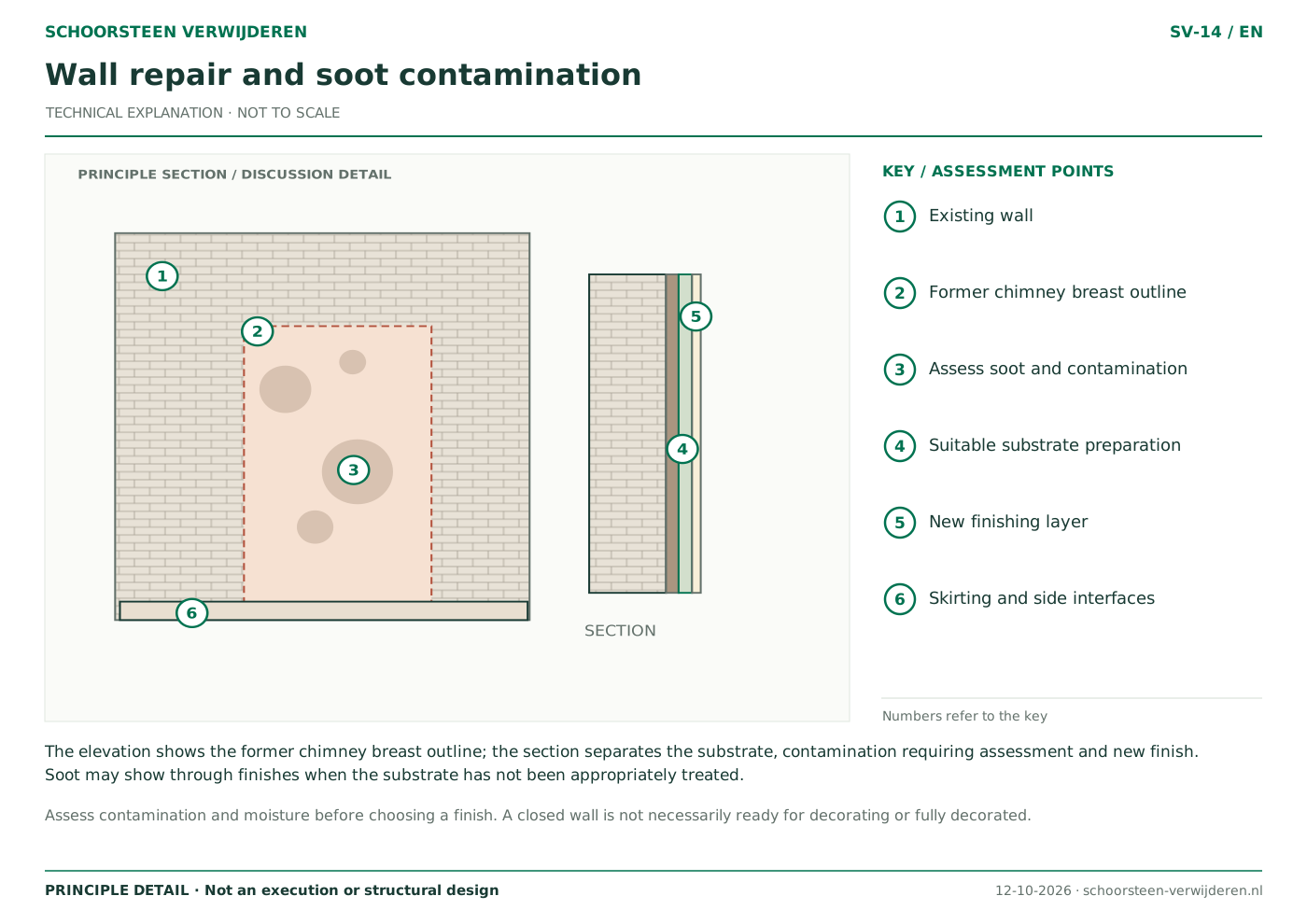
Have the affected layers assessed and establish whether another cause needs attention first. Ask which preparation is suitable before choosing the new finish. A product name found online is not a complete specification for every surface.
Define the repair area
Does the scope cover only the area behind the removed fireplace, or a larger wall? Agree how additional contamination exposed during removal will be assessed. A limited repair should not expand without discussion.
Assess the result against the agreed scope
Check the treated area and its junction with the rest of the wall. Keep information about the finish used. If staining returns, report when and under what conditions it appears rather than repeatedly painting over it.
Frequently asked questions
Will new paint remove every soot stain?
That cannot be promised. The surface and any underlying cause need assessment first.
Is a brown patch always soot?
No. Colour alone does not establish the cause. Also describe dampness, odours and any changes.