Check the building’s allocation of responsibilities
The Dutch government explains that the VvE, the owners’ association, manages and maintains common parts such as the roof. Which parts are common in your building must be checked against its applicable division documents and rules.
Ask the board or manager what information is needed to discuss your proposal. Describe the work, access and intended finish. Provide drawings and investigation findings when available.
Identify other users
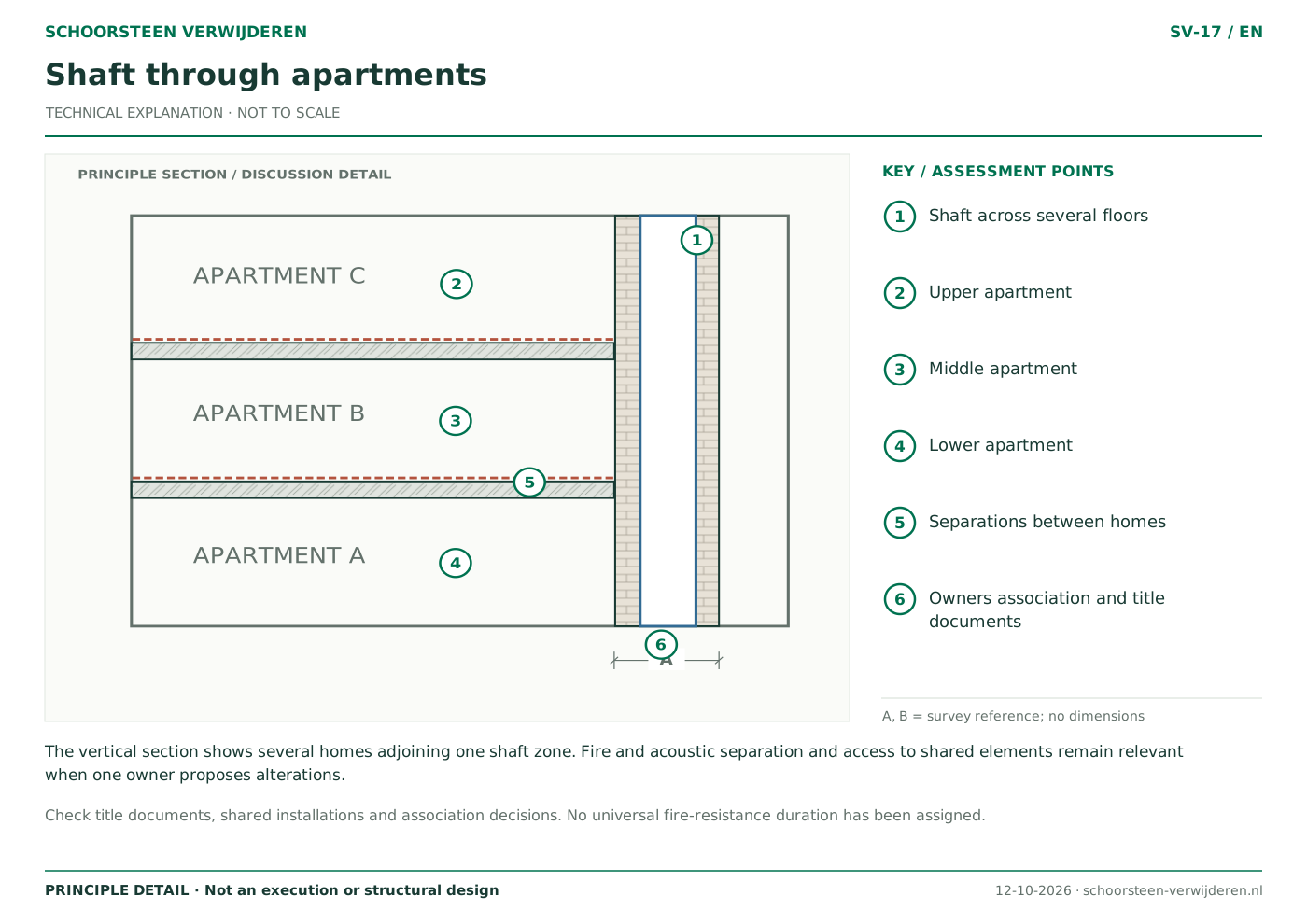
A flue may pass through several homes or relate to a collective installation. Have its function and route assessed rather than looking only at the connection in your own room. Discuss who can arrange access to other spaces if investigation requires it.
Prepare the decision properly
Ask what decision-making process applies and record the outcome in writing. Agree costs, the commissioning party, supervision and the handling of changes. An informal conversation with one resident does not automatically authorise work on common parts. Have uncertainties about authority reviewed.
Organise work within the building
Coordinate access, lift use, hall protection and debris removal with the manager. Tell residents the agreed work period and contact person. Keep completion documents affecting common parts in the building file so a future board can understand the alteration.
Frequently asked questions
Is VvE consent the same as a permit?
No. Internal consent and public rules are separate matters. Check both for the actual proposal.
What if I believe the flue serves only my apartment?
Have that checked against the building documents and actual arrangement. Its visible location alone does not settle the question.
Read more
- Planning work on a shared chimney with neighbours
- Check whether a flue is still in use before removal