In brief
Floors, walls and ceilings each need their own repair scope. Distinguish structural closure, substrate repair and final decorating or flooring.
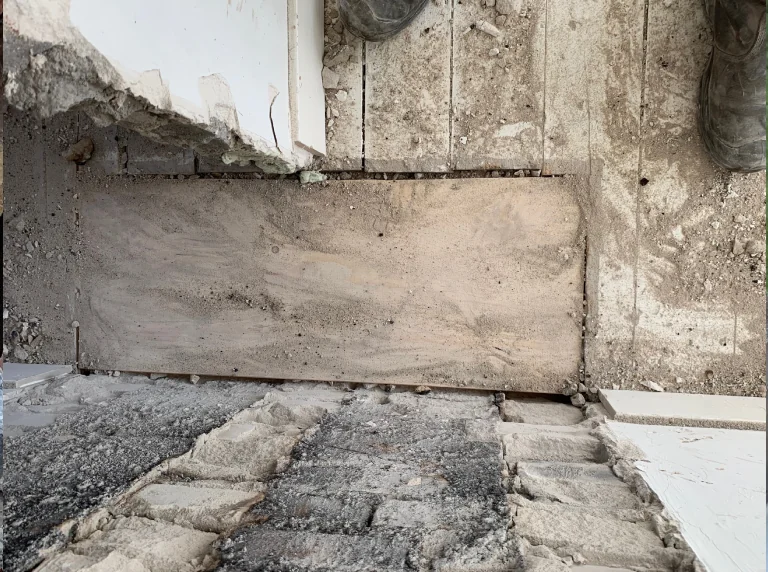
Define the intended level of finish
Will you arrange the finishing yourself, or would you like additional repairs included? A closed opening, a flat substrate and a painted finish are different handover standards. We define the finishing boundary in the quotation. A description such as 'left tidy' does not establish the materials, surface area or intended result.
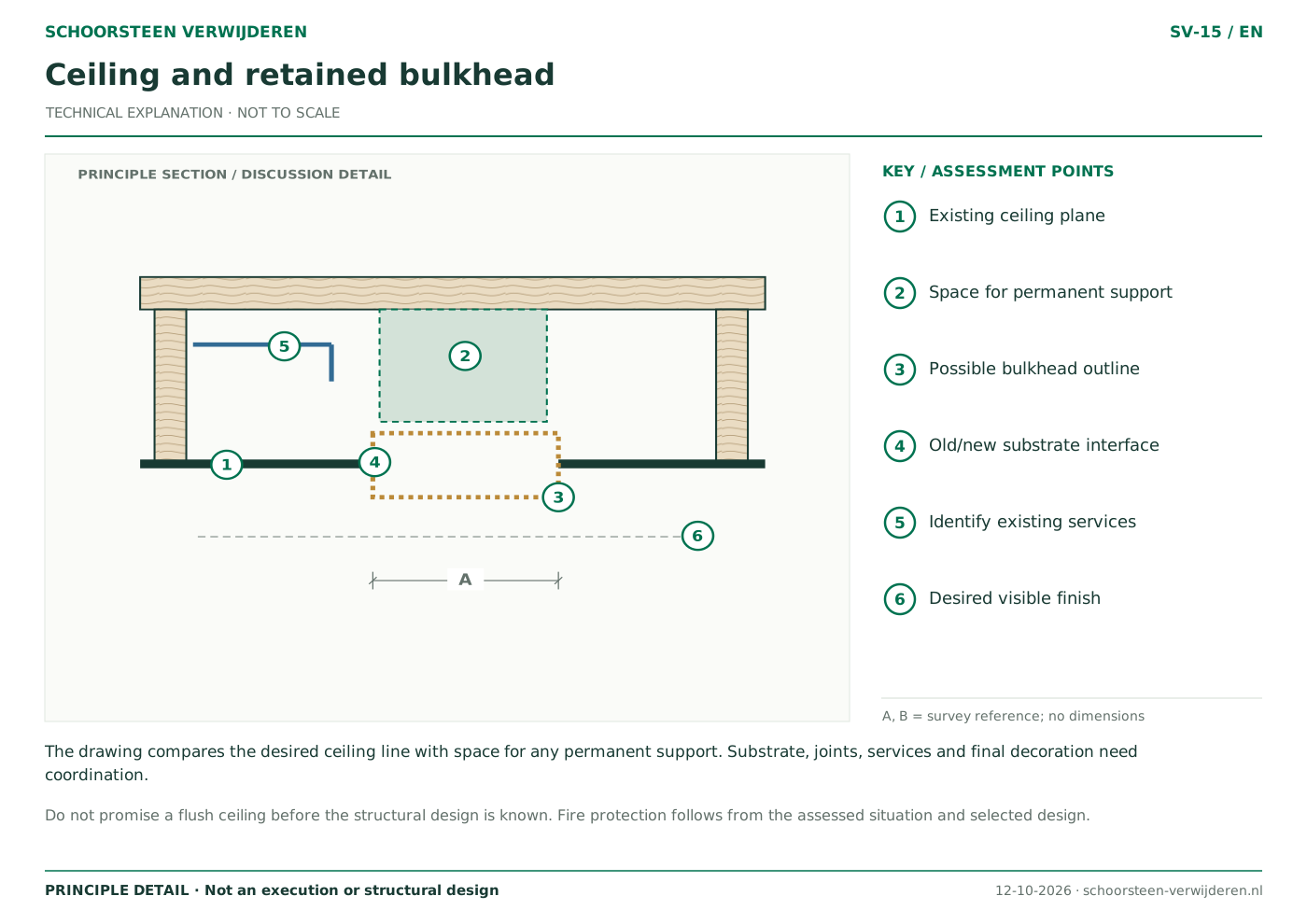
Joining walls and ceilings
The condition of the substrate becomes visible after removal. Older plaster, soot marks and different materials can affect the approach. During assessment, we discuss whether a local repair is appropriate or a larger surface should be included. Existing mouldings, decorative details and unusual finishes need separate consideration.
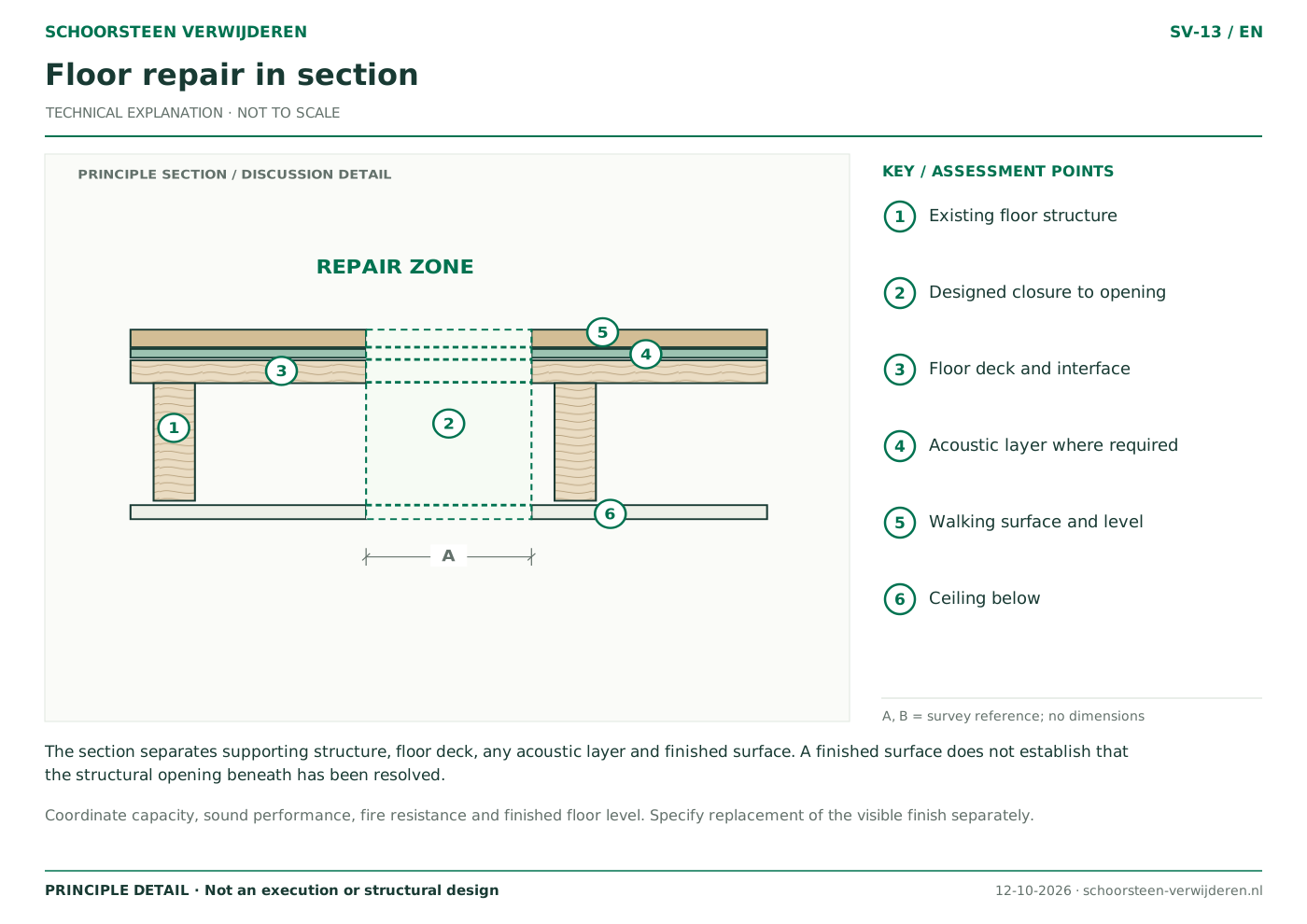
A floor opening is more than a finishing issue
An opening in a load-bearing floor needs structural assessment before the finish is considered. Differences in level and connections to existing floor coverings can also affect repairs. Keep spare boards or tiles if available, but do not assume an invisible match. The pattern and ageing of the existing flooring matter.
Coordinate with the rest of your renovation
Send photographs of the existing finishes and describe the walls, floors and ceilings you want. Area, substrate, material choice and work on several floors affect the price. If your own plasterer or flooring contractor will continue the work, we specify which preparation is included in our scope.
Frequently asked questions
Is all finishing included as standard?
No. The quotation determines which repairs are included. Discuss both building repairs and the final visible finish before accepting the quotation.
Can old soot marks simply be covered?
The contamination and suitable preparation must be assessed first. Applying a new surface layer alone is not automatically a suitable solution.