
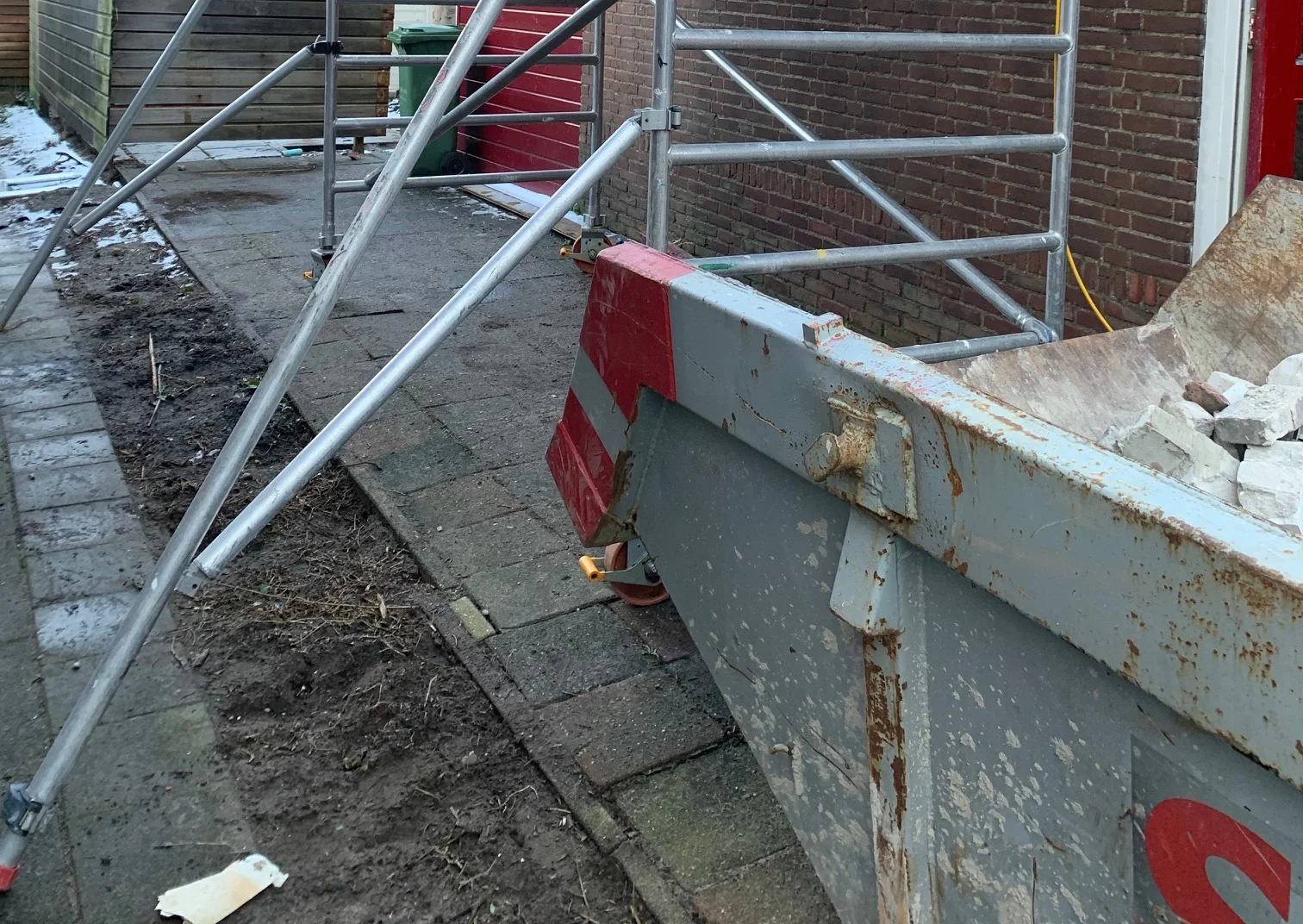
Identify the materials
Chimney work can produce finishing and roofing materials as well as masonry. The material affects disposal arrangements. Share any surveys and records of earlier work so that the contractor is not relying solely on a rough estimate.
IPLO describes requirements for separating demolition waste. Hazardous and non-hazardous waste need separate handling, and asbestos has its own rules. The responsible contractor should establish the appropriate classification and disposal route.
Discuss the route and temporary storage
Will rubble travel through a staircase, communal hall or garden? Agree how that route will be used and protected. Ask where materials can be held without obstructing access or use of the home. Use of public space requires a separate check of local conditions.
Check what the price includes
Does the quotation include transport and the supply and collection of any waste container? Ask how a different quantity or material will be handled. The scope should make the assumptions behind the disposal price clear.
Define the clean-up at handover
Clear of rubble, swept clean and ready for the next contractor do not mean exactly the same thing. Agree what to expect and check the access route and outside areas too. Where relevant, ask for records relating to the agreed waste handling.
Frequently asked questions
Can all the materials go in one container?
Not automatically. The contractor needs to assess the applicable separation and disposal rules for the actual materials.
Does rubble removal include a deep clean of the home?
Not automatically. Describe waste disposal, work-area clean-up and any final cleaning separately.